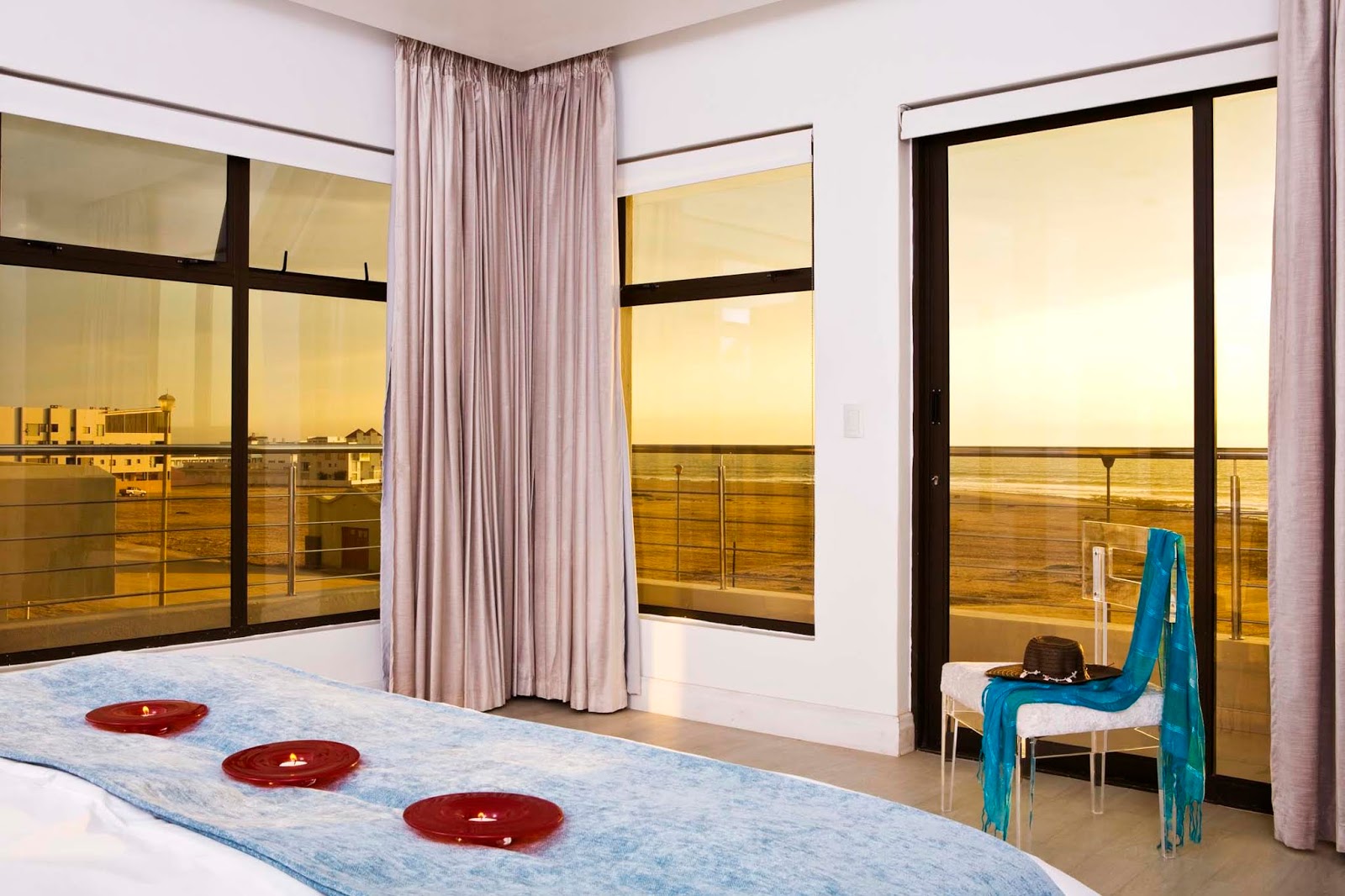
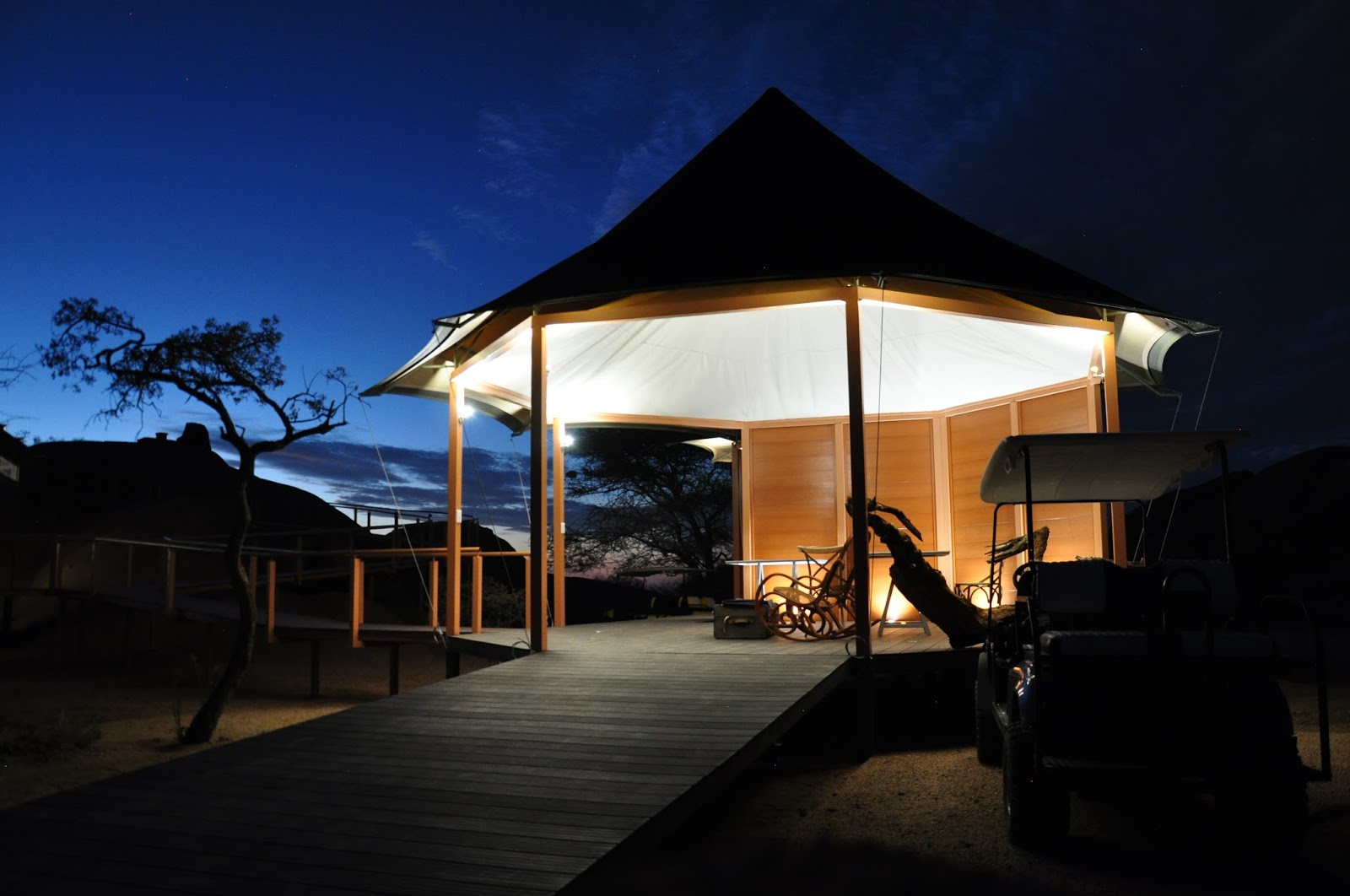
The lodge consists of 15 individual chalets positioned and nestled on the north western side of spectacular Spitzkoppe granite inselbergs rising from the proto-Namib plains with an eastern view.
The main complex with lounge and dining facilities have a north western view onto the Brandberg.
The development and operations are integrated with nature and the environmental impact of the infrastructure and activities reduced to lowest possible levels.
Limited use of concrete with elevated floors and decks and composite materials for walls which can be dismantled easily will enable nature to restore itself in just a few months after deconstruction. Sensitivity towards wildlife and heritage is paramount in all we do.
Each of the spacious Chalets with en-suite bathrooms has a private veranda which connects the guest with the vast stretches of untouched sand and boulders beyond.
The stretched roofs reflect the ambience of a tented camp and will compliment the rounded and pitched formation of the granite mountain. There is one “family unit” which consists of two chalets positioned in close proximity of each other.
The main complex: a lounge, dining area and bar, which leads to a sundowner deck overlooking a small swimming pool.
Spitzkoppe Lodge is benefitting the people living in the #Gaingu Conservancy, as they earn a substantial amount of the gross turnover paid on a quarterly basis.
There is a drive to become a highly sustainable and responsible tourism facility in a desert environment. The development and maintenance cost herefore determine the accommodation rate, which is kept as low as possible and within reach of the current tourism market.
#RossingNamibia #Africa #UraniumMine #RossingUraniumMine #ToursNamibia A day excursion to Rossing Uranium Mine in Namibia, 60 km from Swakopmud, near town Arandis. Rossing is the largest open-cast uranium mine in Africa.
Seevideo portfoliohere Uranium was discovered in the Namib Desert in 1928 in Swakopmund area, but it was not until intensive exploration in the late 1950s that much interest was shown in the area. After discovering numerous uranium occurrences, Rio Tinto secured the rights to the low grade Rossing deposit in 1966. Ten years later, in 1976, Rossing Uranium, Namibia's first commercial uranium mine, began operating.
Rossing Mine is located 60 km east of Swakopmund, off main road to interior. It is the world’s largest open-cast uranium mine. Uranium was first discovered here in the 1920s by Peter Louw, though his attempts at developing the mine quickly failed. In 1965, the concession was transferred to Rio Tinto-Zinc, and comprehensive surveys determined that the formation measured 3 km long and 1 km wide. Ore extraction came on line in 1970, but didn’t reach capacity for another eight years.
Rossing, with 2500 employees, is currently a major player in Swakopmund and Namibia’s economy. The affiliated Rossing Foundation provides an educational and training centre in Arandis, north-east of the mine, as well as medical facilities and housing for its Swakopmund-based workers. It has promised that the eventual decommissioning of the site will entail a massive clean-up.
Three hour mine tours depart at 10 am on the first and third Friday of each month from parking area below Hotel Schweizerhaus. Reservations are made at least one day in advance at the Swakopmund Museum.
Revellers who can not be bothered to clean up after themselves have forced the Ministry of Environment and Tourism to ban the practice of "overnighting" at Long Beach, located between Swakopmund and Walvis Bay. It is situated in the Dorob National Park, and visitors are in fact not allowed to stay in the park overnight without a permit.
Spending the "big days" over the festive season at Long Beach has however become an institution amongst holidaymakers. On New Year's Eve especially the area is a hive of activity as young and old converge on the beach to see in the new year, partying until sunrise.
This year, as has happened before, revellers left the beach in an appalling state, with rubbish strewn everywhere.
The littering by coastal visitors and residents who camp at the beach to celebrate Christmas and New Year has proven to be a headache for the ministry and nature lovers for more than eight years now.
Despite the rule that holicaymakers are not allowed to camp at Long Beach overnight, the ministry made an exception for the festive season.
They will now however start enforcing the rule strictly.
A team of more than 10 officials from the ministry, Namibian Coast Conservation and Management Project (Nacoma) and student volunteers started cleaning up on Friday, New Year's Day.
Some holidaymakers also violated the rules of the park by driving quad bikes and 4x4 vehicles and camping in the restricted areas in the dunes.
Closed down in 2007, Mile 14 campsite has recenly been reopened.
Sun Karros Lifestyle Safaris managed to revamp in just 38 days and it is up and running on time for the high season at the coast.
The new Mile 14 was officially launched on 11 December 2015 and launch was attended by NWR managing director Zelna Hengari.
Mile 14 was a relatively popular campsite and fishing spot for Namibian and South African fishermen, with thousands visiting it during December holiday season, until it was destroyed by wave erosion and left dilapidated.
On 11 December 2015 the first phase has been completed and it now boasts a new facilities: hot showers, the 'Barnyard' Pub and grill restaurant, flush toilets and 24 camping sites with electricity plugs and water taps.
San Karros will take over the management of Mile 14 Camp. 11 jobs have been created during the initial phase, and with that figure expected to increase at a later stage.
The first phase cost about N$2 million while plans are made for further development.
 1. Platz am Meer shopping Mall is 600 m and walking distance from
 3. Atlantic Villa offer a la carte lunch and dinner since the beginning
 5. BBQ for groups can also be arrange
 7. Events: year end functions, etc.
 9. Wine cellar (use of special dinners etc.)