Showing posts with label Cape Columbine. Show all posts

Monday, 30 December 2024

South Africa: Fairfield, Henry Hoyle, John Bagshaw, Reform, Active, Queen of the Nations, Courland, Hartfield & Malmesbury shipwrecks

SAHRA Maritime and Underwater Cultural Heritage

South West Seal wreck in Namibia

September 9:

“This day in our shipwreck and aeronautical wreck history”

1842: A strong north-westerly gale parted the cables of and resulted in the wrecking of four vessels in Table Bay in the Western Cape:

• Fairfield, a wooden sailing barque wrecked near the Hospital Lines at Woodstock Beach. It now lies beneath reclaimed laid.

• Henry Hoyle, a wooden sailing brig became stranded near the Hospital Lines at Woodstock Beach. It was condemned after refloating attempts failed.

• John Bagshaw, a wooden sailing barque wrecked on the South Wharf.

• Reform, a wooden sailing brig wrecked in front of the Imhoff Battery on Woodstock Beach. 

1845: Active, this wooden sailing schooner wrecked in Plettenberg Bay in the Western Cape. It was en route from Knysna, bound for Table Bay, when it had to enter Plettenberg Bay on the 6th of September, leaking badly. On the morning of this day, its master had to run it ashore as the leak became completely unmanageable, and it wrecked during this event.

1889: Queen of the Nations, this wooden sailing barque was found abandoned on the 6th of June and towed to East London in the Eastern Cape by the Clan Alpine. After its 90 tons of cargo were removed, it was driven ashore near Bats Cave on this day and became a wreck. Another report suggests that instead its tow cable parted, and it was driven ashore and wrecked.

1891: Courland, this iron steam-powered ship wrecked east of Durban in KwaZulu-Natal. Very little is known about this vessel.

1895: Hartfield, this iron sailing barque caught alight and was abandoned over 400 km west of Table Bay in the Western Cape. Its crew was initially thought to have been missing but were later brought in having been picked up by the Luna. The vessel is presumed to have foundered after burning down. 

1930: Malmesbury, this steel steam-powered freighter wrecked in heavy fog on Jacobs Reef, south of Cape Columbine on the West Coast in the Western Cape. It was on its maiden voyage, bound for Cape Town with a cargo of maize when it struck the reef and flooded. Its crew were picked up by the tug T S McEwan.

Purchase photo/4K video: portfolio1 portfolio2
Aerial photo/video service/inquiries: info@traveltonamibia.com
Telegram: ExploringNamibia

Wednesday, 25 September 2024

South Africa: Oklahoman, Nerine & Zulu shipwrecks

SAHRA Maritime and Underwater Cultural Heritage

July 7:

“This day in our shipwreck and aeronautical wreck history”

1942: Oklahoman, this American steam-powered ship foundered near Robben Island in Table Bay in the Western Cape after sustaining damage. After running aground on Dassen Island in thick fog and being refloated, the tug T S McEwan was dispatched from Cape Town to render assistance. They found it steaming for Cape Town at full speed with flooded forward compartments. Eventually this caused its propeller to lift out of the water and although a towing attempt was made, it foundered just north-west of Robben Island on this day. Because it sank intact, it set off several submarine alarms and was therefore blown-up using depth charges.

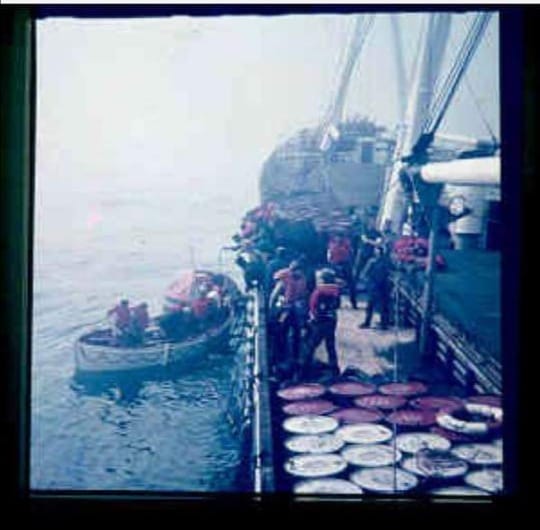
The survivors from the Zulu (1971) being taken on board the Ovambo

1961: Nerine, this South African motor-powered fishing vessel was scuttled off Robben Island in Table Bay in the Western Cape. The Nerine was the fishing vessel captained by Hendrick Goosen that trawled the first Coelacanth in 1938 that was eventually identified by Marjorie Courtenay-Latimer and Professor James Smith.

What is believed to be the last photo of the Zulu (1971) before it went down

1971: Zulu (though usually remembered under its previous name of Zulu Coast II), this South African coaster foundered after a collision with its consort, the Ovambo II, in thick fog, south of Cape Columbine off the west coast in the Western Cape.

Purchase photo/4K video: portfolio1 portfolio2
Aerial photo/video service/inquiries: info@traveltonamibia.com
Telegram: ExploringNamibia

Monday, 20 May 2024

South Africa: Nautilus, Columbine, Emma, Lord Elgin & Knysna shipwrecks

SAHRA Maritime and Underwater Cultural Heritage

March 31:

“This day in our shipwreck and aeronautical wreck history”

1826: Nautilus, this wooden sailing brig wrecked in Table Bay in the Western Cape.

1829: Columbine, this wooden sailing vessel wrecked north of the Cape Columbine Lighthouse off the west coast in the Western Cape. The lighthouse, which was built in 1936, is named after this wreck.

Cape Columbine Lighthouse: the Cape Columbine Lighthouse’s namesake is the nearby wreck of the Columbine (1829). Interestingly, another vessel, the Columbine (1944), a steam-powered merchant ship, was torpedoed about 40 km from this lighthouse on the 16th of June by U-198.

1888: Emma, this wooden sailing vessel wrecked in the Mpekweni River, north of the Fish River lighthouse in the Eastern Cape.

1904: Lord Elgin, this British steel barque struck a rock and foundered in Algoa Bay in the Eastern Cape.

1952: Knysna, this motor-powered fishing vessel was scuttled at Cape Recife in Algoa Bay in the Eastern Cape.

Purchase photo/4K video: portfolio1 portfolio2
Aerial photo/video service/inquiries: info@traveltonamibia.com
Telegram: ExploringNamibia

Tuesday, 5 March 2024

South Africa: Gondolier, A H Stevens, Equator, Trent, Sarah Smith, Celt, Onni, Fascadale, Vilora H Hopkins, Star of the Isles, Sybil & Maritz shipwrecks

SAHRA Maritime and Underwater Cultural Heritage

Unknown shipwreck in Namibia

February 7:

“This day in our shipwreck and aeronautical wreck history”

1836: Gondolier, this brig wrecked on Robben Island whilst entering Table Bay in the Western Cape.

1862: A H Stevens, this iron barque wrecked on the north-western tip of Robben Island in Table Bay in the Western Cape. It had departed Moulmein on the 11th of December 1861, bound for Falmouth via Cape Town. En route it experienced heavy weather and sprang a leak off Mauritius in a cyclone. The crew worked for two weeks straight, but were unable to pump the barque dry. On the 7th of February 1862, the captain tried to enter Cape Town harbour but missed the entrance to Table Bay due to heavy fog. The barque got too close to the north-western coast of Robben Island, where a lack of wind and a strong current pushed it towards the shore. An attempt to anchor the barque failed, and it continued to drift, finally striking the island. The steamer Albatross was sent to assist the barque but was unable to move it, so it was condemned and sold off.

1865: Equator, this brig wrecked near Struisbaai in the Western Cape.

1871: Trent, this American vessel was damaged in a storm and was then condemned in Algoa Bay in the Eastern Cape. Whilst at anchor awaiting its fate, it dragged its anchors and wrecked.

1874: Sarah Smith, this vessel was leaving Durban Harbour in KwaZulu-Natal when it drifted onto Anabella Bank and ran aground. Although it was refloated, after an inspection it was condemned and then sold at auction.

1875: Celt, this iron steam-powered mail ship wrecked in the eponymous Celt Bay, between Pearly Beach and Quoin Point in the Western Cape. All 98 passengers and crew survived. It was the last Union Line ship to be built on the Thames and was one of a series of six mail ships built for the Cape mail service.

1890: Onni, this Russian sailing barque missed its stays, resulting in it wrecking near Bloubergstrand in Table Bay in the Western Cape at night in calm weather. It was carrying coal for the Gas Light Company and was sold off after wrecking.

1895: Fascadale, this steel 4-masted sailing barque wrecked on the rocks south of the Mbizane river in Ramsgate in KwaZulu-Natal. It was bound from Java to Lisbon with a cargo of sugar when at 02:30, with most of the crew of 28 being asleep, and in persistent hazy and rainy weather, it ran straight onto the rocks about 100 meters from the shore. It started breaking up immediately and by daybreak wreckage was strewn along the coast. Three men attempted swimming to the shore, with two of them drowning and the third making it. Supposedly, a further five made it by swimming to shore. Eventually the Nordham Castle arrived with the Chief Officer, Frank Whitehead managing to swim a line from one of its boats to the wreck. This line allowed the rest of the crew to be saved. Reports vary on the number of survivors, with some claiming only one life was lost and others as many as ten.

1897: Vilora H Hopkins, this wooden sailing barque’s cables parted during a south-easterly gale and it was driven ashore where it wrecked on New Brighton beach in Port Elizabeth in Algoa Bay in the Eastern Cape.

1908: Star of the Isles, this steel steam-powered fishing vessel struck a submerged rock about 2.4 km off Quoin Point in the Western Cape at 06:40 in dense fog and then floated for just under three hours before foundering nearby. The crew were safely landed in the lifeboat and walked to the Ratel River farm about 8km inland, where they were taken by wagon to Caledon, and then by train to Cape Town.

1913: Sybil, this British steam-powered vessel wrecked on Porpoise Point at the mouth of the Mzimvubu River in Port St Johns in the Eastern Cape.

1980: Maritz, this South African fishing vessel foundered off Cape Columbine off the west coast in the Western Cape.

Purchase photo/4K video: portfolio1 portfolio2
Aerial photo/video service/inquiries: info@traveltonamibia.com
Telegram: ExploringNamibia

Sunday, 18 February 2024

South Africa: Herschell, Ocean King, Strathblane, Cape Columbine & Namaqua shipwrecks

SAHRA Maritime and Underwater Cultural Heritage

January 23:

Shawnee wreck in Namibia

“This day in our shipwreck and aeronautical wreck history”

1852: Herschell, this wooden snow wrecked in a strong south-easterly gale near Rietvlei in Table Bay in the Western Cape. 

1881: Ocean King, this sailing barque foundered within 20 minutes after striking Penguin Rock, about 32 km south of Port Nolloth off the west coast in the Northern Cape.

1890: Strathblane, this schooner-rigged steam-powered freighter wrecked just west of Cape Recife in the Eastern Cape. It was on its way from London to Durban when it struck a submerged rock and was run ashore, where it wrecked. 

1980: Cape Columbine, this fishing tug foundered about 20 km from the Durban harbour in KwaZulu-Natal.

1993: Namaqua, this wooden fishing vessel wrecked on the north-east corner of Dassen Island off the west coast in the Western Cape.

2020: South African Civil Aviation Authority Cessna S550 Citation (registration no. ZS-CAR), this flight inspection aircraft wrecked 5km northwest of Friemersheim after crashing into the Outeniqua Mountains in the Western Cape. All three occupants lost their lives.

Purchase photo/4K video: portfolio1 portfolio2
Aerial photo/video service/inquiries: info@traveltonamibia.com
Telegram: ExploringNamibia

Tuesday, 9 January 2024

South Africa: F H Hughes & Da Gama shipwrecks

SAHRA Maritime and Underwater Cultural Heritage

December 19:

“This day in our shipwreck and aeronautical wreck history”

1975: F H Hughes, this South African whaler was scuttled 16 km offshore from Durban in KwaZulu-Natal by the SA Navy.

F H Hughes, off presumably Durban, at an unknown date

1979: Da Gama, this motor-powered South African fishing vessel foundered off Cape Columbine off the West Coast in the Western Cape. Very little is known about it and the event.

Purchase photo/4K video: portfolio1 portfolio2
Aerial photo/video service/inquiries: info@traveltonamibia.com
Telegram: ExploringNamibia

Wednesday, 13 December 2023

South Africa: Paternoster

Paternoster is one of the oldest fishing villages on the West Coast of South Africa. It is located 15 km north-west of Vredenburg and 145 km north of Cape Town, at Cape Columbine between Saldanha Bay and St Helena Bay.

The town covers an area of 194.8 hectare and has approximately 1883 inhabitants.

The origin of the name remains unknown. Many people believe that the name, which means ‘Our Father’ in Latin, refers to prayers said by Catholic Portuguese seamen when they became shipwrecked.

It appears as St. Martins Paternoster on an old map of Pieter Mortier so the name may be derived from Paternoster Row in the City of London which is adjacent to St. Martins Court. Other people believe it refers to the beads that the Khoi tribe wore that were called Paternosters.

The area has an array of interesting sea life and wildlife to observe. Activities include whale, dolphin, seal and penguin watching as well as bird watching with over 225 bird species in the area.

Sporting activities range from kayaking, kitesurfing, snorkelling, scuba diving, kite flying, hiking, and for the brave – swimming in the cold West Coast water!

During spring the area is transformed into a floral paradise, with wild flowers growing everywhere forming the South-Western fringe of the famous flower carpets of Namaqualand.

Visitors can pay a visit to the Cape Columbine nature reserve. The reserve covers an area of 263 hectare along the rocky stretch of coastline. The bay, which is part of the reserve, has many picnic spots and braai facilities.

Cape Columbine light house is the last manually controlled lighthouse in South Africa. The lighthouse was built in 1936 on Castle Rock. The light cast a beam which is visible from about 50 km and is usually the first South African lighthouse seen by ships coming from Europe.


Purchase photo/4K video: portfolio1 portfolio2
Aerial photo/video service/inquiries: info@traveltonamibia.com
Telegram: ExploringNamibia

Sunday, 3 December 2023

South Africa: John, Flamingo, Zaltbommel, Madagascar, Ispahan, Carmen and Ismore shipwrecks

SAHRA Maritime and Underwater Cultural Heritage

December 3:

“This day in our shipwreck and aeronautical wreck history”

1825: John, this wooden sailing vessel wrecked at the mouth of the Great Fish River in the Eastern Cape. Very little is known about it.  

1844: Flamingo, this American wooden sailing vessel wrecked at Struisbaai/Struis Bay in the Western Cape. It is possible that it was just grounded and refloated. 

1856: Zaltbommel, this Dutch wooden sailing barque wrecked between Mouille Point and Chavonnes Battery in Table Bay in the Western Cape. 

1858: Madagascar, this steam-powered coaster wrecked at the Bira River mouth in the Eastern Cape after striking the eponymous Madagascar reef and being run aground to prevent the coaster from foundering. 

1886: Ispahan, this fully-rigged iron sailing vessel wrecked at Holbaai Point near Cape Hangklip in the Western Cape.

The 28 lives that were on board were presumed lost until they miraculously popped up at Fish Hoek, having rowed across False Bay in the lifeboat.

1895: Carmen, this steel sailing barque left Durban in KwaZulu-Natal on this day for Calcutta in India and was never heard from again.

1899: Ismore, this four masted steam-powered troop ship wrecked opposite near where today the Cape Columbine lighthouse is, in the eponymous “Soldiers Bay” on the West Coast in the Western Cape.

Loading of the SS Ismore (1899) (from the memoirs of one of the survivors, AJ Montgomery, supplied by his grandson, AD Montgomery)

All the troops and crew managed to reach the shore, but only about 20 horses survived.

The horses embarking on board the SS Ismore (1899), of which only about 20 of the 334 that were on board survived (from the memoirs of one of the survivors, AJ Montgomery, supplied by his grandson, AD Montgomery)

The bay was named Soldiers Bay because of all the soldiers that were in the water after the wrecking.

The wreck now lies at about 10-15m around the blinder which it struck. It is rare to get good visibility on this dive though.

Purchase photo/4K video: portfolio1 portfolio2
Aerial photo/video service/inquiries: info@traveltonamibia.com
Telegram: ExploringNamibia