Tuesday, 12 November 2024

South Africa: Anne Jane, Kent, Elise, Magdala, Pemba & Castillo de Bellver shipwrecks

SAHRA Maritime and Underwater Cultural Heritage

Snowgoose wreck in Namibia

August 6:

“This day in our shipwreck and aeronautical wreck history”

1856: Anne Jane, this vessel wrecked on Woodstock Beach in Table Bay in the Western Cape. Very little is known about the vessel as well as the event. 

1856: Kent, this wooden-hulled sailing barque wrecked near the Salt River Mouth in Table Bay in the Western Cape after its cables parted and it was driven ashore. 

1863: Elise, the wooden-hulled brig wrecked near Mouille Point in Table Bay in the Western Cape.

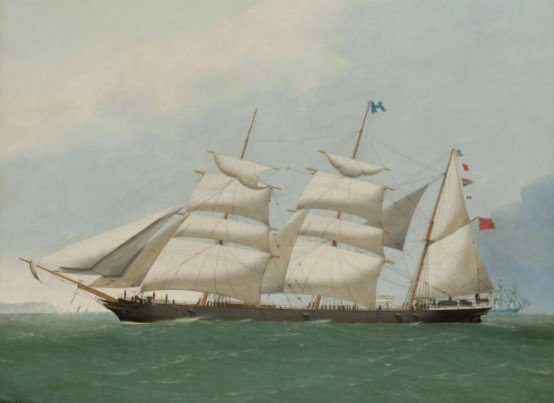
1897: Magdala, the wooden-hulled sailing barque left Algoa Bay in the Eastern Cape on this day, destined for Delagoa Bay (modern day Maputo) in Mozambique. However, the vessel and those that were on board were never seen or heard from again. 

1926: Pemba, the steel-hulled steam-powered ship foundered south-east of Port St Johns in the Eastern Cape after being swamped in heavy weather. Although the crew took to the boats and landed on the beach, one man lost his life.  

1983: Castillo de Bellver, the Spanish super tanker foundered about 70 km west of Dassen Island in the Western Cape, after a fire broke out onboard the vessel. Although the crew were saved, three members could not be accounted for and were presumed to have perished in the fire. The ship burnt intensely, and eventually bad weather broke its back, with the stern section sinking. The bow section remained afloat upturned, and divers were dropped on it by helicopter to secure a tow rope. The tug John Ross towed it further out to sea, and it was scuttled using explosives in deeper waters. It was carrying 252,000 tons of crude oil at the time and it is believed that approximately 60,000 tons were released into the ocean and/or burned during the event. The oil spill initially looked as if it was going to wash up on the coast which would have caused a massive marine disaster however the wind eventually blew it out to sea where it dispersed. It is believed that both its bow and stern sections are releasing oil to this day.

Purchase photo/4K video: portfolio1 portfolio2
Aerial photo/video service/inquiries: info@traveltonamibia.com
Telegram: ExploringNamibia

Monday, 11 November 2024

Namibia: precaution - Waterberg road D2512 damage

Precaution: Namibia Wildlife Resorts  (NWR) is cautioning everyone using Waterberg road D2512 from Okakarara T- junction to Waterberg.

According to NWR, the road has been damaged by the heavy rain experienced in the area.

Tourists and all other drivers are warned to take precautions when using the road as there are holes and cracks that are up to 3 meters deep.

Purchase photo/4K video: portfolio1 portfolio2
Aerial photo/video service/inquiries: info@traveltonamibia.com
Telegram: ExploringNamibia

Saturday, 9 November 2024

South Africa: Grosvenor, San Antonio, Perimede, Charlotte A Morrison, H D Storer, Eliza, Douglas Dodib & Oceanos shipwrecks

SAHRA Maritime and Underwater Cultural Heritage

Cawdor Castle, wrecked in Namibia

August 4:

“This day in our shipwreck and aeronautical wreck history”

1782: Grosvenor, this wooden-hulled British East Indiaman wrecked in a gully near the Tezana River mouth, in Lambazi Bay in the Eastern Cape. Of the approximately 150 people on board, about 130 made it to shore. However, over the coming weeks, starvation, struggle, and survivors finding greener pastures with the local people would lead to only 18 survivors making it back to Cape Town. Subsequent searches for survivors, and often searches for survivors of other wrecks, resulted in finding European men and women living happily amongst the Mpondo, of which at least four families were confirmed to have come from the wreck of the Grosvenor. The Grosvenor has been the subject of many artworks and popular books, and the wreck site has been subjected to many salvage attempts over the years. The most prominent, by Captain Sidney Turner, who in 1880 blasted the nearby rocks and wreck site, where they uncovered a variety of items. Some of these ended up in museums, such as the Durban Local History Museum, where Sidney Turner’s famous goblet, smelted from silver rupees, is housed, as well as two of the Grosvenor’s cannons. However, most of the items were sold by Sidney Turner which, allowed him to start his own company. As a result of this, his relationship with Chief Mqikela of Eastern Pondoland improved over the years and he was chosen to start a new harbour so that Chief Mqikela could compete with Port St Johns, which his brother, Nqiliso, chief of Western Pondoland, had ceded to the British government. Port Grosvenor was therefore founded and became a thriving port under its Port Captain Sidney Turner. However, within a year the Cape government claimed his deal with Chief Mqikela to be illegal and although Port Grosvenor had just started to thrive, it faded into obscurity. The wreck site was most recently dived on by archaeologists in 1999.

1824: San Antonio, this wooden-hulled British East Indiaman became stranded after a strong gale on Woodstock Beach in Table Bay in the Western Cape. It was later condemned.

1860: Perimede, this wooden-hulled brig was run ashore in a leaky condition and wrecked near Dwarskerbos, just north of the Berg River mouth in the Western Cape.

1862: Charlotte  A Morrison, this sailing barque was put in for repairs in Algoa Bay in the Eastern Cape when its cargo caught alight. As the efforts to extinguish the blaze seemed futile, it was run ashore. It burned over the next two days until all that remained of it was below the waterline. 

1878: H D Storer/H D Stower, the sailing barque wrecked after its cables parted in an east-north-easterly gale on Back Beach in Durban in KwaZulu-Natal.

1880: Eliza, this sailing brig caught alight whilst its cargo of coal was being unloaded in East London in the Eastern Cape. Very little is known about this incident, but it is believed that it burned out to become a wreck.

1914: Douglas Dodib, this vessel wrecked in Port St. Johns in the Eastern Cape. Very little is known about this vessel.

1972: A SAAF Douglas DC-3 (registration no. 6850) crashed near the Swartkop Airbase in Gauteng. Very little is known about this incident.

1991: Oceanos, this Greek passenger liner foundered off Mpame Point near Coffee Bay in the Eastern Cape. It set out from East London for Durban in a storm, encountering 10 m tall waves. After an explosion on the 3rd of August, believed to be the result of a faulty ventilation pipe becoming flooded with seawater, it lost power and its engine room started flooding. The captain and crew abandoned ship without informing the passengers, in an apparent effort to get help. The heroes of the event turned out to be the entertainment staff who started a proper evacuation procedure. In all, the 571 people that were on board were saved by a combination of 16 rescue helicopters and the ships lifeboats. The captain and crew were reprimanded for their negligent behaviour. The wreck now lies at a depth just shy of 100 m whilst being battered by a strong current, although it has been visited by a select few brave and highly skilled technical divers.

Purchase photo/4K video: portfolio1 portfolio2
Aerial photo/video service/inquiries: info@traveltonamibia.com
Telegram: ExploringNamibia

Friday, 8 November 2024

South Africa: Mariner & Transvaal shipwrecks

SAHRA Maritime and Underwater Cultural Heritage

Gertrud Woermann, wrecked near Swakopmund, Namibia

August 3:

“This day in our shipwreck and aeronautical wreck history”

1860: Mariner, this sailing barque missed its stays and wrecked on the rocks near the Green Point Lighthouse in the Western Cape. The entire crew and all passengers made it off safely, but the captain shot himself and his body had to be removed from the wreck.

1978: Transvaal, this ex-Navy steam powered frigate was scuttled in Smitswinkel Bay in False Bay in the Western Cape to form an artificial reef after it had reached the end point of its usable life. It forms part of the Smitswinkel Bay wreck route along with the Orotava (1983), Elizabeth (1983), Good Hope (1978), and Rockeater (1972).

Purchase photo/4K video: portfolio1 portfolio2
Aerial photo/video service/inquiries: info@traveltonamibia.com
Telegram: ExploringNamibia

Thursday, 7 November 2024

South Africa: Juno & Tijgerberg shipwrecks

SAHRA Maritime and Underwater Cultural Heritage

City of Baroda, wrecked in Namibia

August 2:

“This day in our shipwreck and aeronautical wreck history”

1874: Juno, this wooden barque wrecked at Blaauwbergstrand (modern day Bloubergstrand beach) in Table Bay in the Western Cape. Very little is known about this vessel.

1937: Tijgerberg, this British/South African whaler wrecked after running aground at full speed in dense fog at night in Saldanha Bay in the Western Cape.

1995: An Aero Air Antonov An-2 (registration no. RA-05708) crashed during its initial climb just after taking off from the Rand Airport in Germiston in Gauteng. All three lives on board were lost and the cause of the accident was determined to be a result of the cargo shifting after take-off, pushing the plane into nearby power lines.

Purchase photo/4K video: portfolio1 portfolio2
Aerial photo/video service/inquiries: info@traveltonamibia.com
Telegram: ExploringNamibia

Wednesday, 6 November 2024

South Africa: Hope, Admiraal de Ruyter, Lively, Durban, Tweed, Wallarah, Kalewa & Frean shipwrecks

SAHRA Maritime and Underwater Cultural Heritage

Arkona shipwreck in Namibia

August 1:

“This day in our shipwreck and aeronautical wreck history”

1849: Hope, this coasting schooner wrecked in Table Bay in the Western Cape.

1860: Admiraal de Ruyter, this Dutch frigate ran aground in False Bay in the Western Cape and was condemned.

1866: Lively, this wooden fishing cutter wrecked on Malgas Island just off Saldanha Bay in the Western Cape.

1886: Durban, this iron British steam-powered ship was lost near Durban in KwaZulu-Natal. Very little is known about this vessel.

1888: The Tweed, this sailing clipper was dismasted in a storm and then ran aground in Algoa Bay in the Eastern Cape. It was broken up and sold off shortly after.

1891: Wallarah, this three-masted British steam-powered ship ran aground on the rocks at Dassen Island in the Western Cape due to a strong current in thick fog, becoming a wreck. It was on its maiden voyage from London to Sydney with a general cargo.

1942: Kalewa, this British freighter foundered and sank within ten minutes after its starboard side was badly damaged after being rammed by the Danish vessel Boringia off the Northern Cape coast. The Boringa picked up all the survivors and no lives were lost.

1957: Frean, this Dutch coaster (on charter to Thesens at the time) wrecked near Port Nolloth in the Northern Cape.

Purchase photo/4K video: portfolio1 portfolio2
Aerial photo/video service/inquiries: info@traveltonamibia.com
Telegram: ExploringNamibia

Tuesday, 5 November 2024

South Africa: Ariosto, Mabel Young & Athina shipwrecks

SAHRA Maritime and Underwater Cultural Heritage

July 31:

“This day in our shipwreck and aeronautical wreck history”

1854: Ariosto, this American sailing barque wrecked on Back Beach in Durban in KwaZulu-Natal.

The wreck of the Athina (1967) on a beautiful day

1879: Mabel Young, this sailing barque encountered a squall that threw it on its beam ends. It was abandoned in a sinking condition off Cape St. Francis in the Eastern Cape and is presumed to have foundered shortly after being abandoned.

An apparent painting of the ‘Mabel Young’ (1879) by J Mclachlan circa. 1877-79. This is not a verified painting, and it could be of another vessel

1967: Athina, this Greek trawler struck Whale Rock off the Robberg Peninsula near Plettenberg Bay in the Western Cape and then found its final resting place just off Robberg Beach. It was later blown up by the Navy but the remains can be seen in the shallows, off the beach and during low tide it often protrudes out of the water. The wreck makes for a popular dive/snorkel site today and the beach is sometimes referred to as “wreck beach” because of its presence.

Purchase photo/4K video: portfolio1 portfolio2
Aerial photo/video service/inquiries: info@traveltonamibia.com
Telegram: ExploringNamibia

Sunday, 3 November 2024

South Africa: Cape Recife Lighthouse & three James Searle

Cape Recife Lighthouse - Est. 1849

The maritime history of Cape Recife does get a bit complicated and on the beach, past the Pati Car Park lies the keel of a boat. It belongs to the James Searle 1, a tug, which was wrecked in 1901. To complicate matters, another tug, the second James Searle was scuttled off Cape Recife.

To complicate matters even further a third James Searle was abandoned on Thunderbolt Reef off Cape Recife in 1950! Who was James Searle? He was apparently the first harbour master at Port Elizabeth. His family and ancestors still reside in Port Elizabeth and Schoenmakerskop. Actually the identity of the keel on the beach is still a bit of a mystery, one of the James Searles was wrecked, one scuttled and one abandoned, we wonder which one drifted the furthest? Research on these three vessels is on-going and the details will change when more information comes to light.

Purchase photo/4K video: portfolio1 portfolio2
Aerial photo/video service/inquiries: info@traveltonamibia.com
Telegram: ExploringNamibia

Saturday, 2 November 2024

Namibia: Top Ten attractions - Ultimate Bucket List

Top 10 attractions - Namibia Ultimate Bucket List

"Ultimate Bucket List" - featuring inspiring destinations, attractions, and experiences that showcase the incredible beauty, diversity, and spirit of our beloved nation. Discover the wonders of Namibia and make unforgettable memories as you embark on these once-in-a-lifetime adventures!

1. Sossusvlei: The iconic red dunes and otherworldly Dead Vlei, a must-see destination in the heart of the Namib Desert.

2. Etosha National Park: A premier wildlife destination, home to various species of wildlife.

3. Fish River Canyon: The second-largest canyon in the world and a geological marvel.

4. Skeleton Coast: A hauntingly beautiful stretch of coastline, with shipwrecks, desert-adapted wildlife, and unique landscapes.

5. Swakopmund: A charming coastal city with unique architecture and a variety of adventure activities.

6. Namib-Naukluft Park: Home to diverse landscapes, including the famous dunes of Sossusvlei and the vast plains of the Naukluft Mountains.

7. Twyfelfontein: A UNESCO World Heritage Site with ancient rock engravings offering a glimpse into the lives of early inhabitants.

8. Zambezi Region: A lush, water-rich region with diverse wildlife, unique cultures, and unparalleled natural beauty.

9. Spitzkoppe: A striking granite peak rising from the desert, perfect for hiking, rock climbing, and stargazing.

10. Walvis Bay: A coastal city offering activities like whale watching, seal kayaking, and exploring its vast lagoon, home to flamingos and other bird species.

Namibia Welcomes You!

Purchase photo/4K video: portfolio1 portfolio2
Aerial photo/video service/inquiries: info@traveltonamibia.com
Telegram: ExploringNamibia

Friday, 1 November 2024

Rwanda: Wilderness Bisate Reserve

Introducing Wilderness Bisate Reserve

Discover a place where sustainable luxury meets profound purpose. Where elegance and royal tradition intertwine. Where soft mists drift over lush forest, and an ever-expanding wild habitat.

Wilderness Bisate Reserve overlooks Volcanoes National Park in Rwanda, a world-renowned sanctuary for mountain gorillas. Perched at an elevated vantage point, Bisate Reserve offers breathtaking panoramic views of six majestic dormant volcanoes: Bisoke, Karisimbi, and Mikeno on one side, and Sabyinyo, Muhabura and Gahinga on the other. Conveniently located just outside Volcanoes National Park, guests are immersed in natural surroundings while still enjoying the utmost luxury and exclusivity.

Steeped in elegance and history, four spacious villas overlook Volcanoes National Park, home of the Endangered mountain gorilla. Paying homage to the regal traditions of Rwandan royalty, Bisate Reserve’s architecture seamlessly blends custom-designed fibre thatch, basket-weave and timber with local volcanic stone; it is an exquisite retreat into both culture and nature.

Volcanoes National Park is a UNESCO World Heritage Site, rich in biodiversity and home to one of the last remaining populations of endangered mountain gorillas. The volcanic landscape provides both dramatic scenery and a unique environment to explore, through nature trails, community visits, and conservation initiatives.

With only four forest villas, Bisate Reserve provides an even more intimate setting by having fewer rooms than award-winning sister camp Bisate. Exceptional, elevated, and at one with our purpose here, this newest addition to the Wilderness portfolio is the most exclusive property in the Volcanoes area, with generous 212 m2 villas offering unmatched views over the forest landscape.

FOUR REGAL FOREST VILLAS

Each of the four expansive en-suite villas – covering 212 square metres - is a sanctuary of privacy and luxury. Their design incorporates expert craftsmanship culturally relevant to Rwanda, while thatch-styled roofs and volcanic rock walls anchor the villas in the landscape.

• Each villa features magnificent original artwork from local artists - from sketches to intricate needlework, with details in each room highlighting unique indigenous flora

• A separate spacious indoor lounge area for in-room dining

• Rooms are warmed by a central fireplace, wood-burning stove, heated towel railings and underfloor heating

• With an indoor shower and bath, each villa also has a wood-fired hot tub on the private deck

• A screen, which is hidden but can be displayed on request, is loaded with documentaries showcasing Rwanda’s impressive wildlife, history and culture

On request, Villas 1 and 2 can be linked via doors to a 12-metre long passage, revealed only to guests who have booked family accommodation. The discreet passage is otherwise hidden; set into the slope, with natural foliage growing over the roof, it is completely unnoticeable from the villas’ approach.

Every moment spent in the exclusive villas overlooking the thriving rehabilitated indigenous forest is a reminder of the vital purpose we share: preserving, protecting, and expanding this iconic wilderness. Here, a journey with Rwanda's precious  mountain gorillas is more than just an adventure – it becomes a story of legacy and purpose.

As well as providing a sanctuary to hundreds of the world’s thousand or so endangered mountain gorillas, Volcanoes National Park is also home to golden monkeys, side-striped jackals, servals, black-fronted duikers, buffalos, forest elephants, tree hyraxes, bushbuck and Egyptian mongooses, genets and squirrels.

Birds include the Rwenzori double-collared sunbird, and endemic specials like the Archer’s robin-chat, mountain black boubou, strange weaver, mountain masked apalis and Rwenzori (collared) apalis make the Virungas area their home.

Testament to our ongoing conservation and reforestation efforts, many of these species can now be seen on our property.

Purchase photo/4K video: portfolio1 portfolio2
Aerial photo/video service/inquiries: info@traveltonamibia.com
Telegram: ExploringNamibia